1-2 Low-Blood-Glucose Levels: A Step-by-Step Quick Guide
Practical instructions for treating low blood sugar during daily life and exercise
Hypoglycaemia, or low blood sugar, can develop quickly and affect both safety and performance. Having a clear and reliable routine helps prevent serious complications and supports confident participation in sport and everyday activities. This guide explains how to recognise hypoglycaemia, treat it correctly, and prepare for emergencies.
Understanding Low Blood Sugar
Low blood glucose, also called hypoglycaemia, is defined as a blood sugar level below 4 mmol/L (70 mg/dL) or a rapid decrease accompanied by typical symptoms such as shakiness, sweating, and dizziness.
During physical activity, blood glucose can change quickly. For this reason, athletes with diabetes and the people around them should be familiar with basic hypoglycaemia management.
Keeping fast-acting carbohydrates nearby and practising treatment steps regularly helps ensure that low blood sugar can be treated quickly and safely.
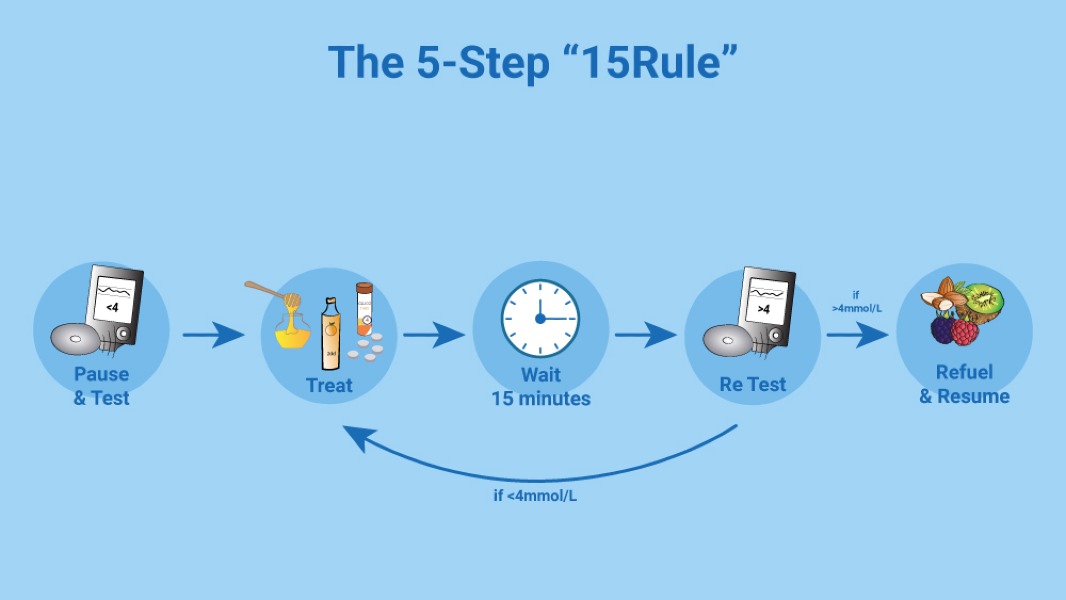
The 5-Step “15–15 Rule” for Treating Hypoglycaemia
1. Pause and Test
If you feel unwell or notice symptoms, stop activity and check your blood glucose using a meter or CGM.
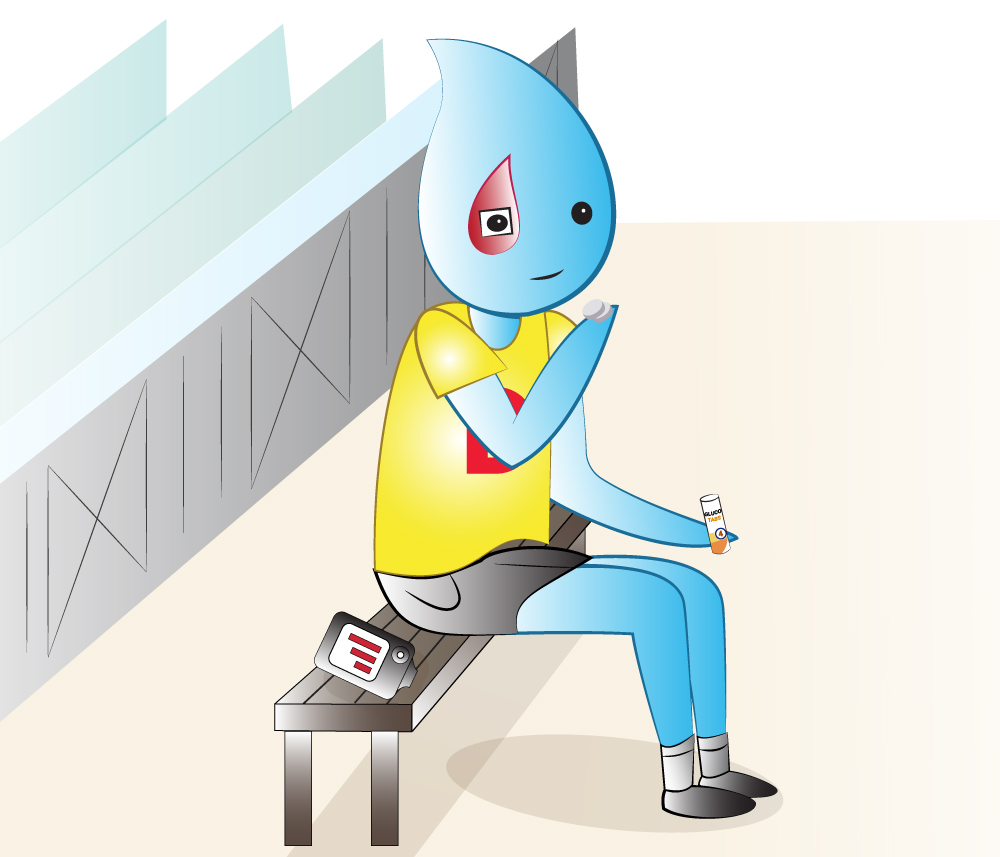
2. Treat With 15 g of Fast-Acting Carbohydrates
Choose one of the following:
5 glucose tablets
150–200 ml of fruit juice or regular soda
1 tablespoon of honey or sugar syrup
3. Wait 15 Minutes
Do not continue exercising and avoid additional food during this time.
4. Recheck Blood Glucose
If levels are still below 4 mmol/L, repeat Step 2.
If levels are above 4 mmol/L, continue to Step 5.
5. Refuel and Resume Activity
If your next meal is more than one hour away or you plan to continue exercising, eat a snack containing slow-release carbohydrates and protein to stabilise blood glucose.
Emergency Plan
In cases of severe hypoglycaemia, when a person is unconscious or unable to swallow:
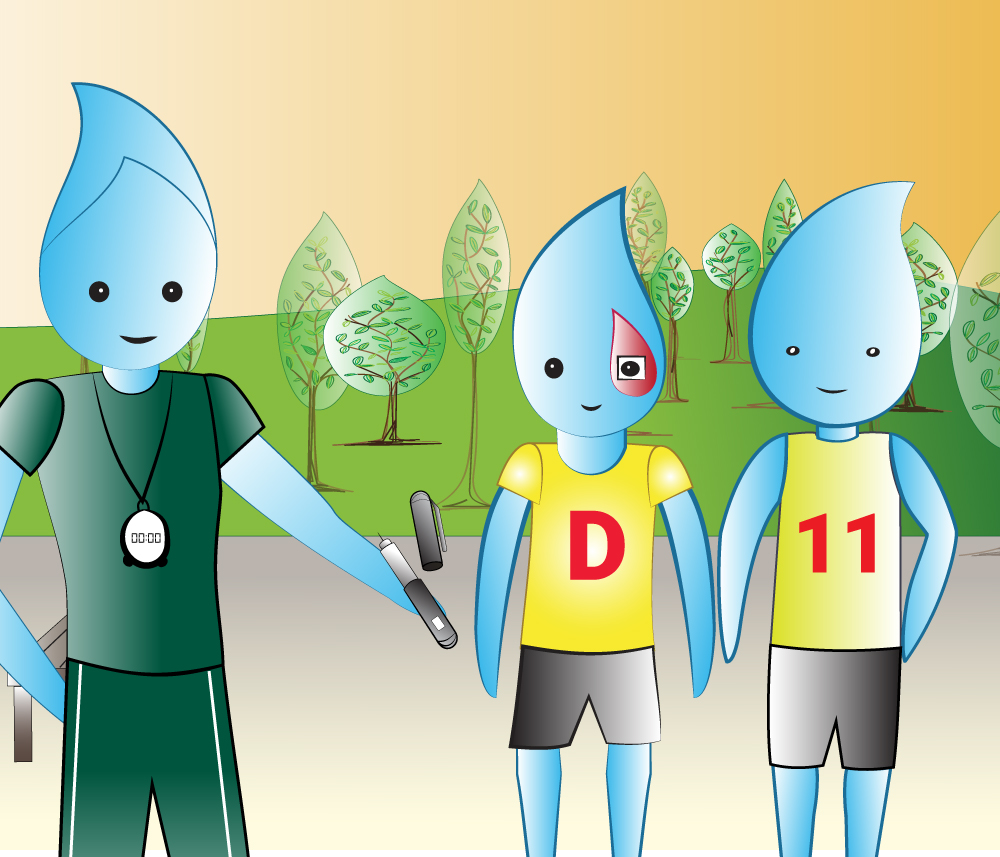
- A trained person should administer glucagon using a pen or nasal spray.
- Emergency medical services should be contacted.
- After recovery, the episode should be recorded to help identify triggers and prevent future events.
SportBag Checklist
People with diabetes who are physically active should carry:
- ️Glucose tabs / gel
- Juice box or small cola can
- ️Glucagon kit (teach a buddy)
- ️CGM reader or meter + strips
- ️Spare slow carb bar
Teammates and coaches should know where these items are stored.
Pro-Tips:
- Set CGM low alerts at around 5 mmol/L before training or competition.
- After intense exercise, consider a small carbohydrate and protein snack before sleep.
- In hot weather or during heavy training, test glucose more frequently.
- Review low blood sugar episodes regularly with your healthcare team.
With good preparation and consistent practice, hypoglycaemia can be managed effectively without interrupting daily life or sporting activities.
